
 Meet a Scientist – The volunteer introduces the students to one interesting topic in his or her field of research or major explained at a basic level and presented in a discussion-based format, allowing the students to relate to the volunteer as a scientist;
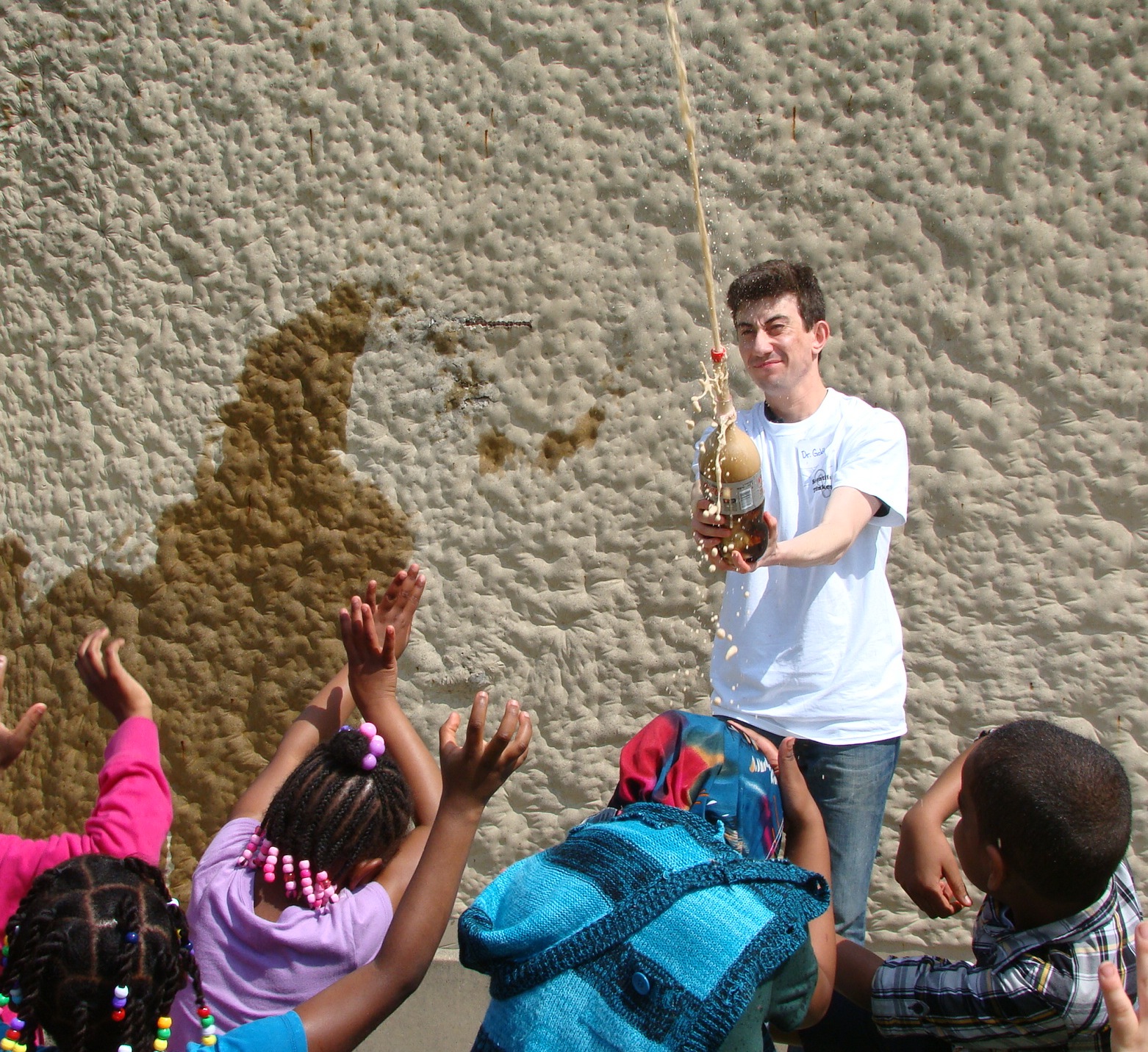
- Be a Scientist – During each visit, the volunteer delivers an inquiry-based lesson that will engage the students in hands-on experiments and scientific thinking. Lessons are pre-selected by the program coordinators and teachers and will be emailed to the volunteers;
- Learn about other Scientists – At least 3 projects per year expand beyond the curriculum to more complex science topics. For example, the students might learn about graphene, starting with a closer look at pencil lead and leading to a discussion of the Nobel Prize. Or, they might get the chance to use a microscope to look at sand, snowflakes and cells before learning about the equipment scientists use to see atoms.
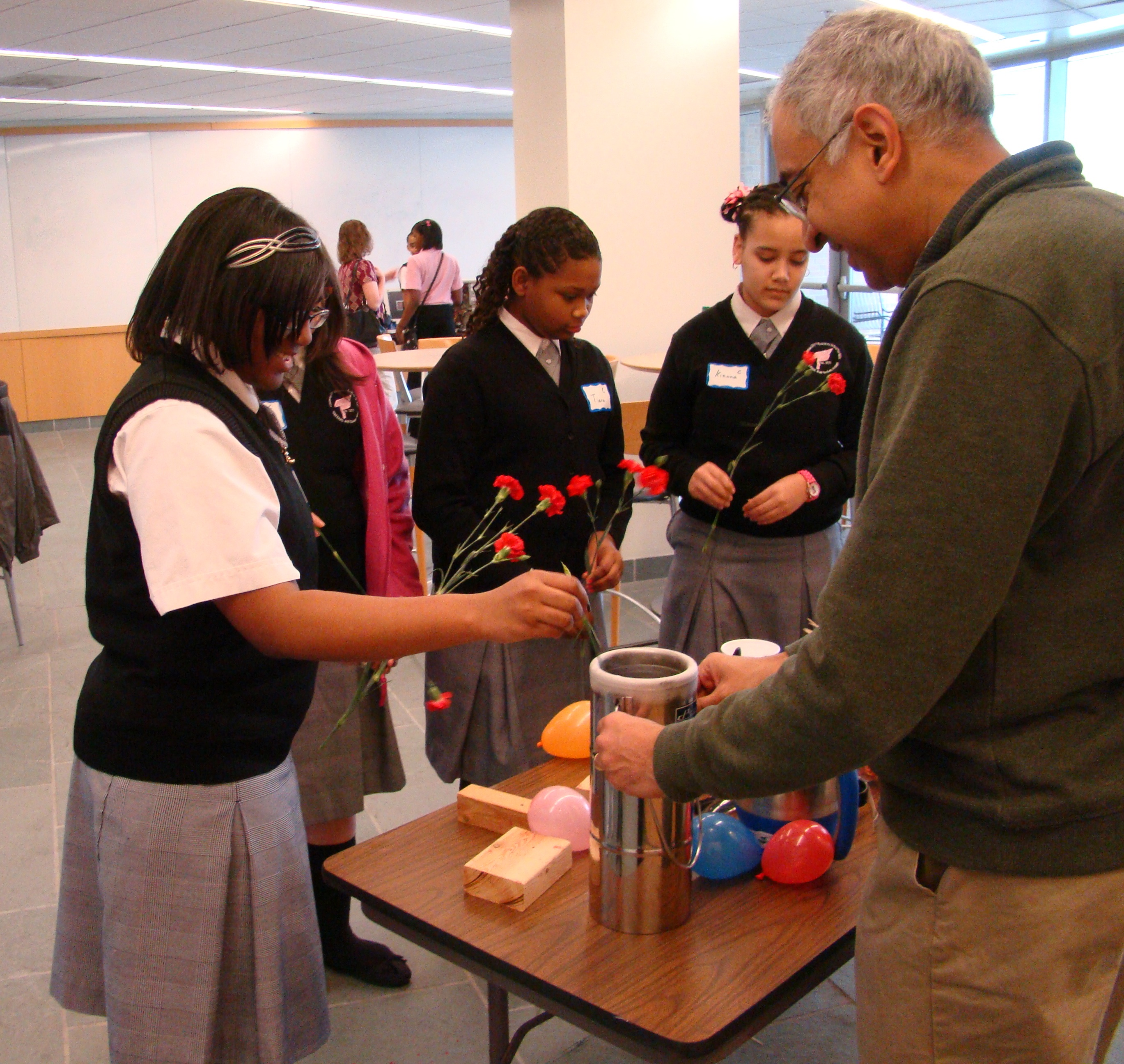
Comets, craters and computer hard drives, oh my… The Center for Emergent Materials and the Center for Cosmology and AstroParticle Physics team up as students and teachers from local Columbus schools explore hands-on activities including a super conducting train exhibition, liquid nitrogen demonstrations, nanomagnetism and computer activities, snowballs and explosions in our solar system: comets and craters and surprises about gravity and motion. Participants begin the morning by having breakfast with scientists and a visit to the planetarium; the rest of the morning is spent engaging in hands-on science activities. (Workshops last approximately 2.5 hours- including breakfast.) Prior to this event, volunteers visited the school to teach an astronomy lesson and following the event, the students returned to OSU for a planetarium visit and a career activity led by CCAPP volunteers.